
Websites Have Changed — Expectations Have Too
Not long ago, having a website at all was enough. Today, that’s no longer true.
Your website is often the first interaction someone has with your business. It shapes trust, sets expectations, and determines whether someone reaches out or moves on. A site that looks fine but isn’t maintained, supported, or monitored will eventually fail you — usually at the worst possible time.
This becomes especially clear during busy seasons, when traffic and expectations increase.
A Website Is a System, Not a One-Time Project
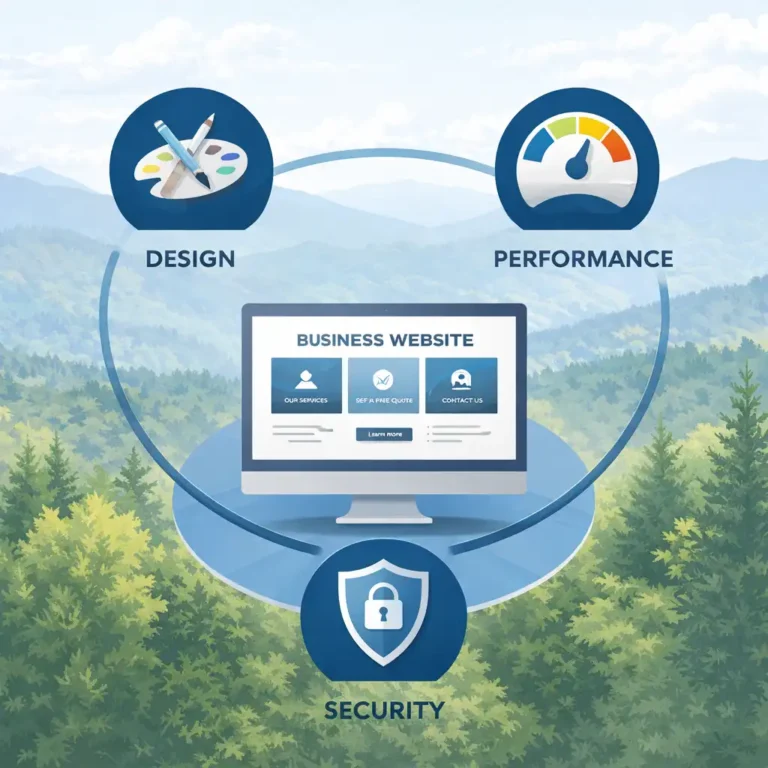
A modern website depends on many moving parts working together:
- Software updates
- Security monitoring
- Performance optimization
- Hosting reliability
When one piece is neglected, problems show up elsewhere. Pages slow down. Forms stop working. Security risks increase. None of this is visible at first, which is why many business owners assume everything is fine — until it isn’t.
The Real Cost of “Set It and Forget It”
Websites that aren’t actively cared for often lead to:
- Emergency fixes instead of planned improvements
- Lost leads from quiet failures
- Increased costs over time
What feels like saving money usually turns into paying more later, especially when fixes are rushed during busy periods.
What Smart Businesses Do Differently
Businesses that rely on their websites don’t treat them as static brochures. They treat them as business infrastructure.
That means:
- Regular reviews and updates
- Monitoring performance and uptime
- Catching problems early
- Making small improvements before they become big ones
This approach keeps the website out of the way so the business can focus on customers.
If your website feels more like a liability than a tool, it may be time to look at how it’s being supported behind the scenes — before the next busy season exposes the cracks.
By Chris Kaminski MCP, Network+