
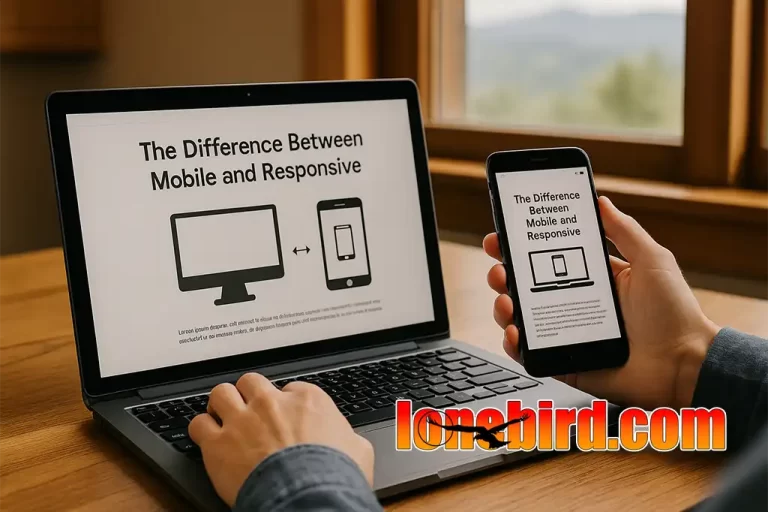
Why Mobile and Responsive Aren’t the Same Thing
“Isn’t my site already mobile-friendly?”
That’s the question most business owners ask — and the answer depends on whether your site was designed for mobile or just made to respond to smaller screens. The difference might seem small, but in web performance and conversions, it’s huge.
Responsive Design: The Retrofit Approach
Responsive design came first. It means your layout and content adjust automatically to fit different screen sizes.
It’s a good start, but it’s essentially a desktop design that shrinks down. Fonts, buttons, and menus are rearranged, but not always optimized for mobile behavior.
Responsive design is reactive — it adapts, but it doesn’t lead.
Mobile Design: The Intentional Approach
Mobile design starts from the smallest screen up. Instead of trimming a desktop site, it focuses on simplicity, speed, and clarity from the start.
- Menus are shorter.
- Buttons are tap-friendly.
- Forms are minimal.
- Content is broken into easy, scrollable sections.
When scaled up to tablets or desktops, a mobile-first design still looks great — because it was built on solid usability principles, not just resized code.
Why It Matters for Your Business
1. Performance Wins Rankings
Mobile-optimized sites load faster and rank higher, especially in local search.
2. Better User Experience
Visitors stay longer and engage more when navigation feels natural on their devices.
3. Higher Conversions
Tap-to-call, one-click booking, and short contact forms turn visitors into customers.
A responsive site adjusts — but a mobile-first site performs. It’s built for how people actually browse, buy, and connect today. If your website wasn’t designed with mobile in mind from the start, it’s time to rethink your approach.
Ready to modernize your site?
Partnerhttps://lonebird.com/contact/ up with Lone Bird Studio.
We’ll rebuild your design from the ground up for mobile performance, speed, and engagement.